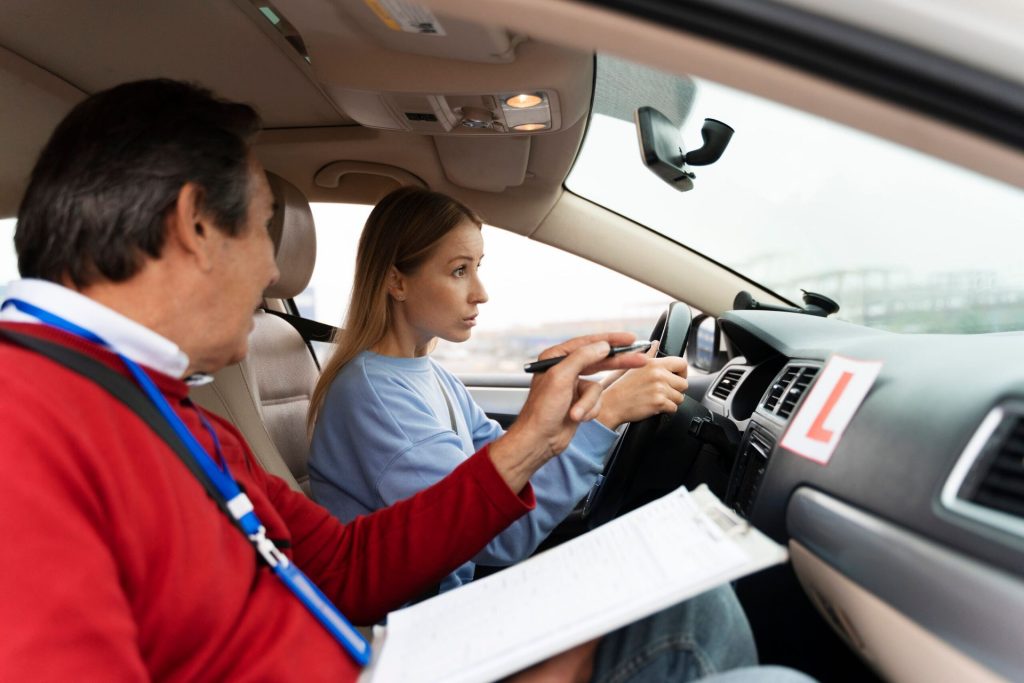
Road safety starts with human knowledge, not just sturdy cars and bright signs. Driver education turns new learners into mindful road users with clear lessons, guided practice, and honest feedback. When people grasp how traffic flows and how vehicles respond, they make quicker, wiser choices. Fewer crashes follow, insurance bills fall, and every trip feels calmer. In the pages that follow, we explore how formal training lifts skills, shapes habits, and cuts risk. We keep the language simple so every reader can see how a quality lesson—whether taken online or behind the wheel—builds safer streets for everyone.
Risk Perception Skills
Spotting danger early is the first rule of safe driving. Classroom sessions use videos and simple diagrams to show how tiny clues can point to big trouble ahead. Students learn to scan mirrors every eight seconds, read brake-light flashes several cars up, and watch the body language of walkers at the curb. A U.S. highway study found that trained teens cut crashes from unseen hazards by 24 percent in their first licensed year. Key hazards covered include:
• Sudden lane changes by other cars
• Hidden driveways and blind hills
• Weather shifts such as slick rain or fog
This life-saving gap often equals a full car length at city speeds, giving drivers precious time and space to act.
Mastering Vehicle Control
Knowing what a car does under pressure gives drivers calm confidence. In practice yards, instructors teach smooth steering, steady braking, and how weight shifts when you turn or stop. Tests show that at 50 mph, a typical sedan needs about 176 feet to halt—half for thinking time and half for stopping force. Students mark that distance with cones and feel the pedal response at lower speeds. They also practice threshold braking to keep wheels from locking and learn why anti-lock systems pump up to 15 times each second. By testing limits in a safe space, muscles remember the correct moves, trimming reaction delay by nearly half a second in studies.
Rules and Laws Made Clear
Traffic laws set a shared code for every road user, yet many new drivers see them as abstract until class breaks them down. Lessons explain right-of-way charts, lane markings, and local speed rules using clear street images. Instructors highlight how a 10 mph drop in posted speed can reduce fatal-crash risk by almost 40 percent, according to national safety data. Students also explore point systems that raise insurance bills when rules are ignored, and they discuss red-light cameras, seat-belt laws, and fines for phone use. Quick quizzes cement memory and spot gaps. This shared confidence smooths traffic flow around the clock.
Human Factors Awareness
Good teachers look beyond machines and focus on the person in the seat. Courses cover fatigue, emotion, alcohol, and drugs with honest, sometimes hard stories. Students wear special goggles that mimic a 0.08 blood-alcohol level; the blurred lines show how judgment drops long before total loss of control. They see how four hours of sleep loss slows reaction by 0.05. In group talks, they learn simple fixes:
• Share driving on long trips
• Pull over for a two-minute stretch every hour
• Place phones in the glove box to curb distraction
By facing these human limits early, learners plan breaks, refuse rides when tired, and speak up if friends try to text at the wheel. Such small choices can save many lives yearly.
Defensive Driving Habits
Defensive driving turns theory into a daily shield. Coaches teach the three-second gap rule: pick a roadside marker, count “one-one-thousand…” until your bumper reaches it. This cushion gives room for sudden stops. They also stress the four-corners skill set—seeing all directions, keeping escape space open, signaling early, and staying visible. Studies show that drivers who hold a three-second gap lower rear-end crashes by more than 40 percent. Lessons cover steer-then-brake tactics for wet curves and the “headlights meet” rule when topping hills at night. The result is smoother traffic, lower repair costs, and fewer tense horns on morning commutes each day.
Technical Skills in Practice
Hands-on tasks cement what books teach. During road sessions, learners repeat key maneuvers until they feel natural. Core drills include:
• Parallel park within 18 inches of the curb
• Execute a smooth three-point turn on a narrow street
• Merge at highway speed without forcing brakes behind
• Perform an uphill start using the hand-brake hold
Each drill trains steering feel, throttle control, and clutch or brake timing. Instructors give calm cues while measuring wheel turns and stopping distances. Data recorders show reaction times dropping from 1.2 to 0.9 seconds over six lessons. By the final review, students place tires within six inches of a mark, every time proving that hands and eyes now work as one team.
Eco-Safe Driving Insights
Modern driver courses link safety with planet care. Smooth moves save fuel and cut emissions. Students learn to shift at lower revs, hold steady speeds, and plan trips to avoid peak jams. European studies show that gentle acceleration can trim fuel use by up to ten percent and lower CO₂ output accordingly. A classroom chart compares a hard-start drive that burns 0.4 gallons in ten miles with an eco-run that sips only 0.35. Over a year, this small shift could save 70 gallons and hundreds of dollars. Families breathe cleaner air, and roads see calmer flows as sudden braking and bursts all but fade away.
Community and Culture Change
Driver education shapes more than solo skills; it builds a culture that respects shared space. Schools host parent nights so guardians can echo the same safe messages at home. Peer teams create short videos showing classmates choosing seat belts or refusing risky rides, turning social proof into safety fuel. Local police visit lessons to share crash scenes they have worked on, putting numbers into human context. Records show seat-belt use rising five percent and teen nighttime crashes falling eight percent within two years of such programs. This shared mindset turns streets into courteous zones where mistakes are forgiven before they grow into tragedy today.
Ongoing Learning Matters
Roads change, and so should driver skills. Many programs invite licensed drivers back for refresher courses after two or five years. Instructors review new signs, lane-splitting rules for motorbikes, and features like lane-keep assist. They run quick eyesight checks because vision can slip by one percent each year past forty. Workshops show how tire-pressure monitors work and why winter pressure drops about one psi for every ten-degree fall. Short quizzes reveal forgotten facts—nearly 30 percent of attendees misremember the correct headlight dip distance for oncoming cars, yet after one evening class, correct recall jumps to 92 percent. Regular checkups maintain skills just like yearly health exams do.
The Road Ahead
Driver education is not a one-time hurdle; it is a steady path toward safer travel for all. Clear lessons turn complex rules into everyday sense, while guided practice wires quick, calm reactions. From spotting danger early to saving fuel with smooth moves, trained drivers lift safety on every street they use. When communities support ongoing learning, the effect multiplies, trimming crashes, medical costs, and grief. If you have never taken a formal course, or if years have passed since your last, consider enrolling again. A single evening behind the wheel with a coach could save a life—maybe your own.